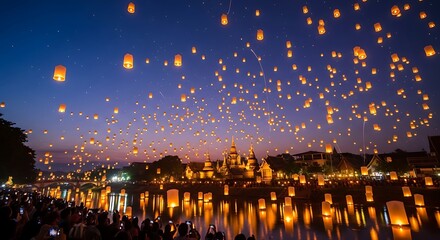
When thousands of glowing lanterns slowly rise into the night sky, Chiang Mai transforms into a dreamlike world. This magical moment marks the Yi Peng Festival, one of Thailand’s most visually stunning and spiritually meaningful celebrations. Beyond its beauty, Yi Peng carries deep historical roots and cultural symbolism that reflect the beliefs of Northern Thai (Lanna) society.
Origins of the Yi Peng Festival
The Yi Peng Festival originates from the ancient Lanna Kingdom, which ruled Northern Thailand over 700 years ago. The name “Yi Peng” comes from the Lanna language, where “Yi” means two and “Peng” refers to the full moon. The festival takes place during the full moon of the second month in the Lanna lunar calendar, usually in November.
Yi Peng has strong connections to Buddhism and local traditions. In the past, Lanna people believed that releasing lanterns helped pay respect to Phra That Chulamani, a sacred relic believed to be located in heaven. Over time, the festival also became a way for people to let go of misfortune and negative thoughts.
Cultural and Spiritual Significance
At its heart, Yi Peng symbolizes renewal, gratitude, and spiritual cleansing. Releasing a lantern into the sky represents letting go of bad luck, worries, and past mistakes. Many people make silent wishes as their lantern floats away, believing it brings good fortune and clarity for the future.
During the festival, homes, temples, and streets are decorated with khom loy (sky lanterns) and khom fai (decorative lanterns). Temples hold merit-making ceremonies, where people offer food, candles, and prayers to monks. These rituals reflect the Thai belief in making merit (tham bun) to improve one’s karma.
Yi Peng also strengthens community bonds. Families and neighbors gather to prepare lanterns, attend temple events, and celebrate together. This sense of unity is a key part of Northern Thai culture.
Yi Peng Today
Today, Yi Peng is celebrated most famously in Chiang Mai, where locals and visitors from around the world come to experience the festival. While modern celebrations include organized lantern releases and tourism events, traditional values remain at the core. Many communities now focus on eco-friendly lanterns to protect the environment and maintain cultural respect.
Yi Peng is often celebrated alongside Loy Krathong, but it remains distinct due to its Lanna heritage and sky-focused rituals.

Why Yi Peng Matters
Yi Peng is more than a beautiful festival. It represents faith, hope, and the balance between tradition and modern life. By honoring ancient beliefs while adapting to today’s world, Yi Peng continues to shine as a powerful symbol of Thai cultural identity.