If you walk through any night market in Thailand, the irresistible aroma of sizzling noodles, tamarind sauce, and garlic quickly fills the air. The sound of a hot wok clanging, flames rising, and noodles being tossed skillfully by street vendors usually means one thing: pad thai is being cooked.
For many travelers, pad thai is the first Thai dish they ever try. It appears on restaurant menus across the world and is often considered the symbol of Thai cuisine. Yet what many visitors don’t realize is that this beloved noodle dish has a fascinating history tied to nationalism, cultural change, and even government policy.
Unlike many ancient Asian dishes, pad thai is actually relatively modern. Its origin is deeply connected to Thailand’s efforts to build a national identity in the 20th century.
So how did a simple stir-fried noodle dish become Thailand’s most famous food?
Let’s explore the story behind pad thai.
The Origins of Pad Thai
A Dish Born from National Identity
The history of pad thai is closely connected to the leadership of Plaek Phibunsongkhram, the prime minister of Thailand during the late 1930s and 1940s.
At that time, Thailand was undergoing major political and cultural changes. The government wanted to modernize the country and promote a strong sense of national identity. Food became part of that strategy.
Rice shortages were also a concern during this period. Because rice was Thailand’s main staple, the government encouraged people to consume more noodles instead.
To promote this idea, the government introduced a new national noodle dish: pad thai.
Street vendors were encouraged to cook and sell it across the country. Recipes were shared widely so that the dish could spread quickly among the population.
In many ways, pad thai was one of the world’s earliest examples of a government-promoted national food.
Chinese Influence on Thai Noodles
How Chinese Cuisine Inspired Pad Thai
While pad thai was promoted as a national dish, its roots are influenced by Chinese cooking traditions.
The stir-frying technique used to make pad thai comes from Chinese immigrants who settled in Thailand centuries ago. Chinese-style rice noodles and wok cooking gradually became part of local food culture.
Over time, Thai cooks adapted these techniques and added their own flavors.
This combination of influences helped create a dish that feels both traditional and uniquely Thai.
Key ingredients that give pad thai its signature taste include:
- Rice noodles
- Tamarind paste
- Fish sauce
- Palm sugar
- Eggs
- Tofu or shrimp
- Bean sprouts
- Crushed peanuts
- Lime
The balance of sweet, sour, salty, and slightly spicy flavors is what makes pad thai so distinctive.
Why Pad Thai Became Thailand’s Signature Dish
The Rise of Street Food Culture
Thailand has one of the most vibrant street food cultures in the world, and pad thai quickly became one of the easiest dishes for vendors to prepare.
Street stalls could cook it quickly using a single wok over high heat. The ingredients were inexpensive and easy to find.
Because of this, pad thai spread rapidly across cities and towns.
Night markets in places like Bangkok became famous for their noodle stalls, where vendors developed their own variations of the dish.
For travelers visiting Thailand today, tasting pad thai at a street stall is often considered a must-do experience.
The Classic Ingredients of Pad Thai
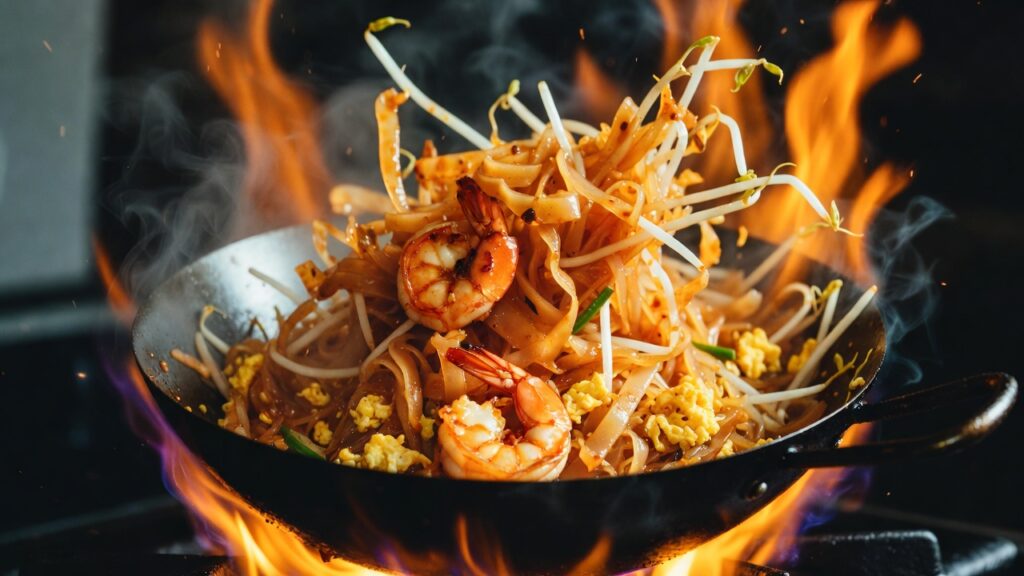
What Makes Authentic Pad Thai
Authentic pad thai is all about balance.
Thai cuisine focuses on combining several flavors in one dish, and pad thai does this perfectly.
A typical recipe includes:
Rice Noodles
Flat rice noodles are the base of the dish and absorb the flavorful sauce.
Tamarind Sauce
Tamarind gives pad thai its signature tangy flavor.
Fish Sauce
Adds saltiness and depth.
Palm Sugar
Creates the slight sweetness that balances the sour tamarind.
Protein
Common choices include shrimp, chicken, tofu, or sometimes pork.
Fresh Toppings
Bean sprouts, chives, lime wedges, and crushed peanuts provide freshness and texture.
The result is a dish that feels light yet incredibly satisfying.
Regional Variations of Pad Thai
Different Styles Across Thailand
Although the classic version is the most famous, pad thai can vary depending on where you try it.
Pad Thai with Shrimp
Often considered the most traditional version.
Pad Thai with Chicken
Common in restaurants and casual eateries.
Vegetarian Pad Thai
Uses tofu and vegetables instead of meat.
Street Vendor Pad Thai
Usually cooked quickly over high heat with extra smoky flavor from the wok.
Some vendors even add chili flakes or extra lime to adjust the flavor to each customer’s taste.
Where Travelers Should Try Pad Thai
Best Places to Experience the Dish
Travelers visiting Thailand can find pad thai almost everywhere, from street stalls to high-end restaurants.
But many food lovers say the best versions are found in busy street markets.
Popular places to try authentic pad thai include:
- Night markets in Bangkok
- Food streets in Chiang Mai
- Beach markets in Phuket
Each location offers slightly different flavors depending on the local cooking style.
Watching a street vendor cook the noodles in a blazing wok is also part of the experience.
Fun Facts About Pad Thai
Here are some interesting facts travelers might not know:
Pad Thai is less than 100 years old
Many Thai dishes are centuries old, but pad thai became popular only in the 20th century.
The name literally means “Thai stir-fry”
“Pad” means stir-fried, while “Thai” refers to its national identity.
It’s one of the most ordered Thai dishes worldwide
Restaurants around the world serve pad thai, making it Thailand’s most internationally recognized dish.
Street vendors helped make it famous
The dish became popular largely because it was easy to cook and sell on the street.
Tips for Travelers Ordering Pad Thai
If you’re visiting Thailand and want the best experience, here are some simple tips:
Add Lime Before Eating
Fresh lime enhances the flavor of the noodles.
Try It From Street Vendors
Many locals believe the best pad thai comes from street stalls rather than restaurants.
Adjust the Spice Level
You can add chili flakes if you want more heat.
Watch the Cooking Process
Seeing noodles tossed in a hot wok is part of the fun.
Pad Thai’s Global Popularity
Today, pad thai is one of the most recognized dishes in global cuisine.
From street markets in Thailand to restaurants in Europe, America, and Asia, it has become a symbol of Thai food culture.
For travelers exploring Thailand, tasting authentic pad thai connects them directly with the country’s history, culture, and street food traditions.
It’s more than just noodles.
It’s a dish that represents modern Thailand itself.

This is very interesting, You are a very skilled blogger.
I have joined your feed and look forward to seeking more of your magnificent post.
Also, I’ve shared your web site in my social networks!