At first glance, Phi Ta Khon masks look nothing like what most people expect from a ghost festival. Instead of fear, they spark laughter. Instead of darkness, they burst with color. Long noses curl upward, eyes widen with curiosity, and smiles stretch across painted faces. This surprising design makes many visitors ask the same question: Why do Thailand’s ghost masks look so cheerful? The answer lies in history, belief, and the joyful spirit of the people who created the festival.
The Phi Ta Khon Festival takes place in Dan Sai district, Loei Province, usually between June and July, depending on local spiritual calendars. Villagers trace the festival’s origin to an ancient Buddhist story known as Prince Vessantara, one of the Buddha’s past lives. According to local belief, when the prince returned from exile, the celebration grew so loud and joyful that even spirits joined the procession. Instead of fearing these spirits, villagers welcomed them as part of the happiness.
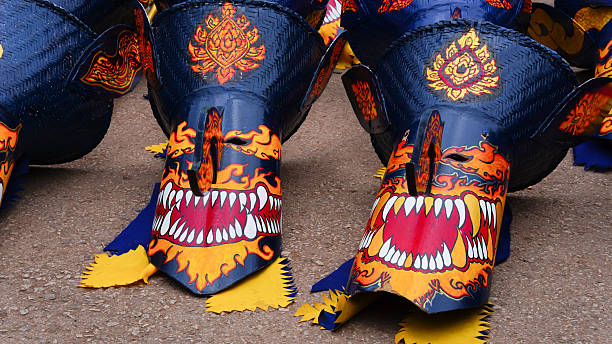
Local elders and community leaders shaped the festival around this idea. They did not want ghosts to represent danger or death. They wanted them to symbolize joy, abundance, and unity. This mindset directly influenced how people designed the masks. A scary face would contradict the meaning of the celebration. A playful face would support it.
Mask makers exaggerate human expressions to create humor and approachability. Large eyes suggest excitement. Wide mouths show laughter. Tall noses add mischief. These features allow performers to interact freely with the crowd. People laugh, tease each other, and dance together. The masks act as social tools rather than symbols of fear.
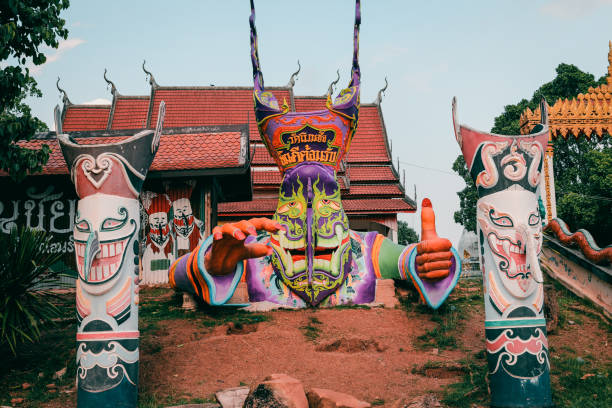
Color also plays a powerful role. Artists choose bright shades like red, blue, yellow, and green to reflect energy and life. These colors stand out during daytime parades and attract attention from both locals and visitors. Dark tones rarely appear because they clash with the festival’s joyful atmosphere.
Traditional materials further soften the masks’ appearance. Villagers often use sticky rice steamers, coconut husks, and fabric scraps to build the base. These everyday objects connect the masks to rural life. When people recognize familiar materials, they feel comfort instead of fear. The masks feel human, handmade, and close to home.
The playful design also helps children engage with the festival. Families encourage kids to wear masks, join parades, and learn traditions early. Friendly faces remove fear and replace it with curiosity. This approach helps preserve the festival across generations.
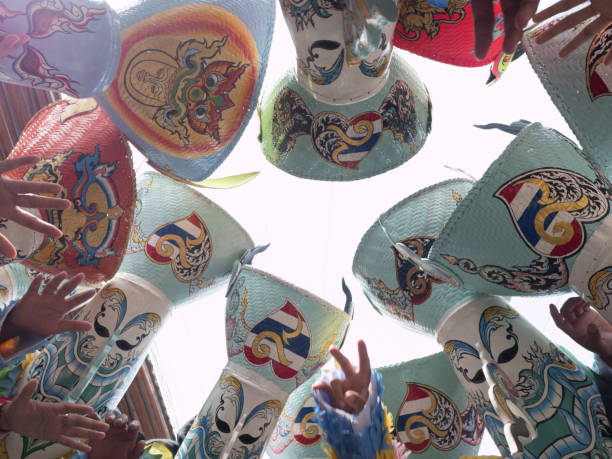
At its heart, Phi Ta Khon reflects the Thai concept of sanuk, the joy of having fun. The masks show that even ghost stories can celebrate life. Through color, humor, and imagination, the people of Dan Sai transformed spirits into symbols of happiness.
Phi Ta Khon masks look playful because the festival celebrates joy above all else. They remind everyone that laughter unites communities and that tradition can feel light, lively, and welcoming.