Thailand celebrates National Mother’s Day (วันแม่แห่งชาติ, Wan Mae Haeng Chat) every year on 12 August.
Unlike countries that celebrate Mother’s Day on the second Sunday of May, Thailand has its own date and traditions. Thai Mother’s Day is not simply a commercial celebration , it is closely connected with family, gratitude, respect, Thai culture, and the country’s history.
For visitors to Thailand, 12 August is a special day to see a different side of Thai culture and family life.
When Is Mother’s Day in Thailand?
Thai Mother’s Day is celebrated every year on 12 August.
The date was officially established as Thailand’s National Mother’s Day in 1976, when 12 August was chosen to coincide with the birthday of Queen Sirikit, the Queen Mother. She was born on 12 August 1932.
Today, 12 August is both National Mother’s Day and a public holiday in Thailand.
Why Doesn’t Thailand Celebrate Mother’s Day in May?
The commonly recognized international Mother’s Day date is the second Sunday of May, but there is actually no single worldwide date for Mother’s Day.
Different countries have developed their own traditions and dates.
Thailand had already established its own National Mother’s Day tradition before settling on 12 August. In fact, the date changed several times throughout Thai history.
The first official Mother’s Day celebration in Thailand took place at Suan Amphorn in Bangkok in 1943, organized by the Ministry of Public Health. Because of World War II, the celebration was later discontinued.
Mother’s Day was subsequently observed on 15 April, beginning in 1950. Another attempt was made to hold the celebration on 4 October in 1972, but that arrangement lasted only one year.
In 1976, 12 August became the permanent date because it was the birthday of Queen Sirikit.
So, Thailand does not simply “use a different date from international Mother’s Day.” The country has its own national history and tradition surrounding Mother’s Day.
The Connection With Queen Sirikit
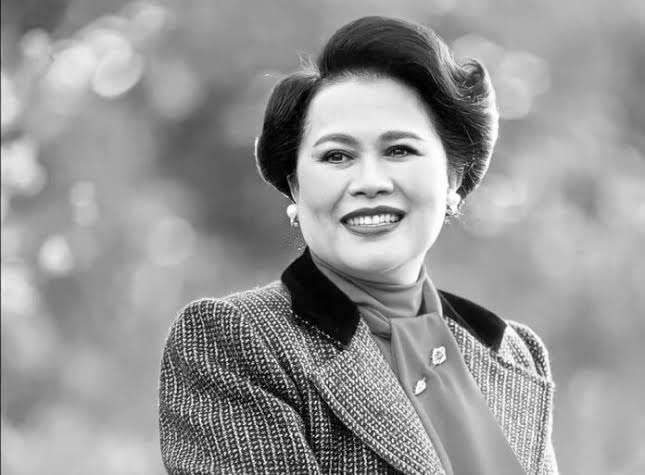
The choice of 12 August has a special historical meaning.
Queen Sirikit became strongly associated with the idea of motherhood in Thailand and was widely regarded as a mother figure for the Thai people. Her public work included efforts connected with people’s livelihoods, charitable activities, and the preservation and promotion of Thai arts and culture.
Because of this connection, National Mother’s Day honors both mothers within Thai families and the broader cultural idea of motherhood and care for the nation.
It is important to understand that Thai Mother’s Day is therefore both a family occasion and a national cultural observance.
Why Is Jasmine the Symbol of Thai Mother’s Day?
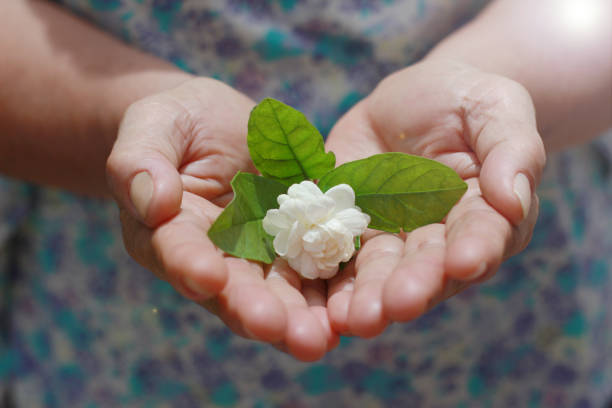
If there is one flower strongly associated with Thai Mother’s Day, it is jasmine (ดอกมะลิ, dok mali).
Jasmine is traditionally associated with:
- Purity
- Unconditional love
- Kindness
- Gratitude
- A mother’s enduring love for her children
Its white color is commonly understood as representing purity, while its beautiful fragrance is associated with the goodness and love of a mother.
Jasmine also has an important place in Thai culture. Traditionally, jasmine has been used in religious offerings and Buddhist ceremonies, partly because of its white color and pleasant fragrance.
Another reason the flower is especially meaningful is that jasmine can bloom throughout the year and has a long-lasting fragrance. This has been compared with the lasting love and devotion of a mother.
Giving Jasmine to Mother
One of the most recognizable Mother’s Day traditions in Thailand is giving jasmine flowers to one’s mother.
Jasmine may be presented as:
- A small bouquet
- A jasmine garland
- A decorative arrangement
- A jasmine-shaped pin or accessory
In some traditions, people wear jasmine pins on their clothing as a visible symbol of Mother’s Day.
In recent years, jasmine products sold for Mother’s Day can also support charitable causes. In 2026, the Thai government promoted jasmine sales for National Mother’s Day, with part of the proceeds going toward assistance for people experiencing hardship and scholarships for disadvantaged children and young people.
The Most Meaningful Tradition: Wai and Asking for Blessings
Mother’s Day in Thailand is not only about giving a gift.
One of the most meaningful traditions is for children to show respect to their mothers through the Thai wai.
The child may kneel before their mother, place their hands together in a wai, and bow respectfully. The mother may then give her blessing to her child.
For many families, this is an emotional moment because it represents:
Respect + gratitude + love + the bond between mother and child.
It is a beautiful example of how Thai culture expresses affection not only through words, but also through respectful gestures.
Children at School Celebrate Mother’s Day
Thai Mother’s Day is especially visible in schools.
Schools may organize special Mother’s Day ceremonies where students:
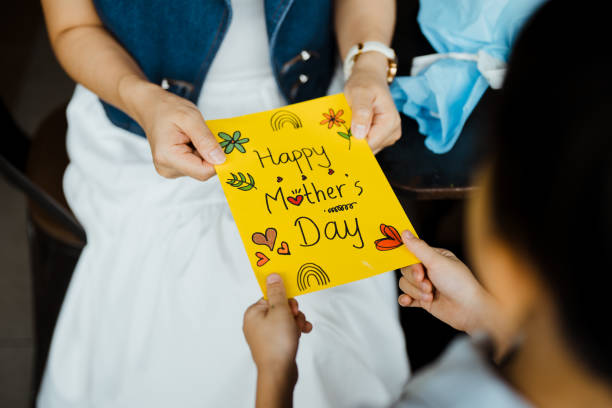
- Make cards or crafts for their mothers
- Give jasmine flowers
- Perform songs or activities
- Participate in ceremonies
- Pay respect to their mothers
- Ask their mothers for blessings
Some schools invite mothers to attend special ceremonies with their children.
These events can be particularly meaningful because they teach children about gratitude and respect for their parents.
The Traditional Mother’s Day Song
Mother’s Day celebrations in Thailand are also associated with songs about mothers.
Schools and community events may include performances dedicated to mothers, creating a warm and emotional atmosphere.
Music is an important part of many Thai celebrations, and Mother’s Day is no exception.
How Thai Families Celebrate at Home
Not every family celebrates in exactly the same way.
Some families keep the day simple and spend time together at home. Others may:
- Give their mother flowers
- Give a small present
- Take her out for a meal
- Visit grandparents or older relatives
- Make food together
- Call or visit their mother if they live far away
- Spend the day together as a family
For many people, the most important part is simply being together and showing appreciation.
Is It Only About Biological Mothers?
The meaning of Mother’s Day can extend beyond a biological mother.
Thai people may also use the occasion to show gratitude toward someone who has played a mother-like role in their life, such as a grandmother or another caregiver.
The deeper idea is appreciation for the person who has cared for, supported, raised, or guided them.
Why 12 August Is Important in Thailand
The date has several layers of meaning.
12 August is:
- 🇹🇭 Thailand’s National Mother’s Day
- A day to honor mothers
- A day associated with jasmine
- A day for showing gratitude and respect
- An opportunity for families to spend time together
- A date historically connected with Queen Sirikit, the Queen Mother
- A national public holiday
The Thai government continues to recognize 12 August as both National Mother’s Day and a national holiday.
Mother’s Day and Thai Culture
Perhaps the most interesting thing about Thai Mother’s Day is that the celebration reflects several important Thai cultural values.
Respect
The wai and other traditional gestures show the importance of respecting parents and elders.
Gratitude
Children use the day to recognize the sacrifices and care they have received from their mothers.
Family
The day gives families an opportunity to spend time together and strengthen family relationships.
Purity and Love
The white jasmine flower represents the idea of a mother’s pure and lasting love.
Community
Mother’s Day is also observed through schools, community activities and national events, making it more than a private family celebration.
What Does “Mother” Mean in Thai Culture?
The Thai word for mother is แม่ (mae).
The idea of “mae” carries a strong emotional meaning in Thai culture. It represents not only the person who gives birth to a child, but also someone associated with care, sacrifice, protection and unconditional love.
This helps explain why Mother’s Day in Thailand can feel particularly ceremonial and respectful.
What Can Visitors Expect on August 12?
If you are traveling around Thailand during Mother’s Day, you may notice the celebration in everyday life.
You may see:
Jasmine flowers and jasmine garlands being sold
Blue decorations associated with the occasion
Families spending time together
Mother’s Day activities at schools
Children paying respect to their mothers
National and royal imagery
Special promotions and events
Families returning home to visit their mothers
The atmosphere can vary from place to place, but the central theme remains the same: showing love and gratitude to mothers.
Why Is Jasmine More Than Just a Flower?
Jasmine is perhaps the perfect symbol for Thai Mother’s Day because its meaning goes beyond its appearance.
Its white petals represent purity.
Its fragrance represents the goodness associated with a mother’s love.
Its ability to flower throughout the year represents love that does not disappear with time.
And its long-standing place in Thai religious and cultural traditions gives the flower an additional layer of meaning.
For Thai Mother’s Day, jasmine is not simply a decoration. It has become a cultural symbol of a mother’s love, sacrifice and purity.
Thai Mother’s Day in One Sentence
Thai Mother’s Day on 12 August is a national celebration that combines family love, gratitude, respect, Thai cultural traditions, jasmine flowers, and the historical connection to Queen Sirikit, the Queen Mother.
A Different Mother’s Day
Mother’s Day may be celebrated around the world, but each country gives the occasion its own meaning.
In Thailand, 12 August has become a day when children pause to thank their mothers, families come together, jasmine flowers become symbols of love, and traditional gestures of respect take center stage.
It is a day that shows that Mother’s Day does not need to have the same date everywhere to have the same universal message:
Love your mother. Appreciate her. And never take her love for granted.